Biola University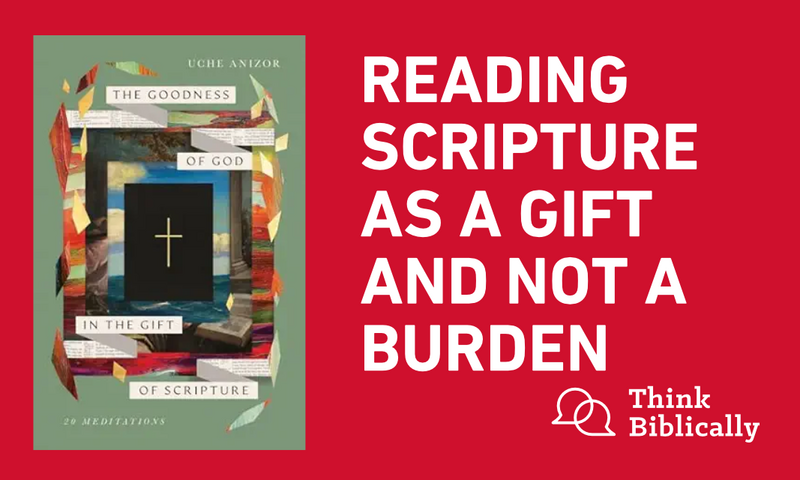
What are the different gifts we get from being immersed in God鈥檚 Word? How do we develop a hunger for Scripture? And why do we so often see reading Scripture as a burden rather than a blessing. We鈥檒l tackle these questions and more with our guest, our Talbot colleague in theology, Dr. Uche Anizor around his new book, .
Dr. Uche Anizor is Professor and Chair of the Undergraduate Theology at Talbot. He is the author of eight books, including the award winning book, Overcoming Apathy: Gospel Hope for Those Who Struggle to Care, and How to Read Theology.
Episode Transcript
Scott Rae: [upbeat music] What are the different gifts that we get from being immersed in God's word? How do we develop a hunger for scripture? And why do we often see reading scripture as a burden rather than a blessing? We'll tackle these questions and a whole lot more with our guest, our Talbot colleague in theology, Dr. Uche Anozie, around his new book, "The Goodness of God in the Gift of Scripture." I'm your host, Scott Rae.
Sean McDowell: And I'm your co-host, Sean McDowell.
Scott Rae: This is Think Biblically from Talbot School of Theology at Biola University. Uche, thank you so much for being with us. So appreciate your book. Gave me a whole host of things that, frankly, I'd never thought about before.
Uche Anizor: Well, thanks for having me on.
Scott Rae: So this is great stuff. You know, there are a lot of books on the Bible and about, and a lot of books about reading the Bible well. What motivated you to write this particular approach-
Uche Anizor: Mm-hmm
Scott Rae: ... That you, that you put out in your book?
Uche Anizor: Yeah. I think my particular burden was the sense that, I wondered what sort of kept people away from sort of regularly engaging the Bible. So is it that they don't believe the Bible is true? I'm not, I wasn't convinced of that. I started to get, become convinced that the, one of the barriers, especially among young people, was that they didn't, they weren't convinced that the Bible was good, and that the Bible was for their good, and it was, so it was, that it was a gift given from God for their w- for their wellbeing. And so I wanted to sort of use this idea of the Bible as a gift, as a way of sort of reframing how we think about what the Bible is fundamentally.
Sean McDowell: So, yeah, that's a great response.
Scott Rae: Go on. That's, that's really helpful.
Sean McDowell: As an apologist working with students, I would agree that they're not convinced it's good, and many also feel like it's just 2,000 years ago. It doesn't really relate to my life.
Uche Anizor: Yeah. That's right. Yeah.
Sean McDowell: But the goodness is at the root of it. We've seen apologetics shift from, is it true, to, like, is God good?
Uche Anizor: Yeah.
Sean McDowell: So calling scripture good- ... I think, is scratching where people are itching, so to speak. Now, there's a lot of books about reading the Bible well that some of our colleagues [chuckles] at Talbot have written.
Uche Anizor: Absolutely.
Sean McDowell: How is this book unique?
Uche Anizor: Yeah, so this is, this is not a book about hermeneutical strategies or exegetical sort of, approaches. It's really just a book about posture. So what are the kinds of postures we need to adopt towards scripture in order to sort of read it faithfully and fruitfully as Christians?
Scott Rae: All right. And you, and you would summarize the big idea as what?
Uche Anizor: The big idea is scripture is God's gift through which he gives us a plethora of other gifts. And so we approach the Bible as a... When we approach the Bible as a gift, it'll sort of, combat that sort of lethargy we have towards engaging with it. Because when we're engaging with the Bible as a gift, we're, we're engaging with God's speaking voice to us, and a speaking voice that wants to sort of draw us into a meaningful relationship with him.
Scott Rae: Why, why do we tend not to see it that way?
Uche Anizor: Yeah. I think there are a number of, like, legitimate reasons. Maybe, I don't wanna, maybe not legitimate reasons, but real-
Scott Rae: Understandable
Uche Anizor: ... Understandable reasons.
Scott Rae: Yeah.
Uche Anizor: Right? So, so the Bible, like Sean, you were saying, it feels irrelevant. It's 2,000 years ago, or it's just boring. Right? It's boring. We have those experiences where we feel like, "I'm not getting anything out of it." or, you know, the Bible is oftentimes presented as, you know, you should read your Bible. And, and oftentimes our hearts rebel against shoulds, right? And so there are a number of reasons like that that I think are understandable, not excusable, but understandable. Yeah.
Sean McDowell: So Uche, you're a professor at Talbot School of Theology.
Uche Anizor: Mm-hmm.
Sean McDowell: So it's your job to teach the Bible and assume that it's good.
Uche Anizor: Yeah.
Sean McDowell: Now, you don't think that it's good because you're a professor.
Uche Anizor: Mm-hmm.
Sean McDowell: You're a professor because you think it's good.
Uche Anizor: I am, yeah.
Sean McDowell: What's the backstory in your own life and your wrestling with scripture that brought you to the place that you think it's good?
Uche Anizor: Yeah. So for me, you know, I became a Christian when I was, when I was 18, and, I didn't come from a Christian home. There was no one, no exposure to Christianity or anything like that. But when I became a Christian, I was befriended by these guys in, at my church. They were, they were, like, six years older than me then. They're all guys from, like, the hood, basically. They're all these hood guys, came from hard backgrounds. None of them had a college-
Sean McDowell: What, what city or where is this?
Uche Anizor: This is, this is back in Toronto-
Sean McDowell: Yeah
Uche Anizor: ... Where I grew up. And none of them had sort of a, an educational background. None of them went to Bible college. None of them went to college. But they loved the Bible. And, and so they would hang out, you know, you know, on weekends, have these sleepovers. I don't know what they were doing, but they'd have these sleepovers where they're basically, like, debating the Bible. They're talking about the Bible. They're studying the Bible. And I looked at these guys as an 18-year-old, and they were, like, 24, and I'm like, "These guys are, like, cool guys, but they love the Bible."
Scott Rae: Interesting.
Uche Anizor: "And the Bible has changed these guys' lives." And so I said, "Okay, I wanna be exactly like them." And then, and then I saw that these guys had this kind of understanding that wasn't tied to their Bible college education. It wasn't tied to a seminary education. It, it just came from them being steeped in the word. And so I loved that, and I wanted to emulate that, in my own Christian life.
Scott Rae: Now, you, the structure of the book is more, is more devotional than anything else.
Uche Anizor: Yeah.
Scott Rae: The different, the different gifts that God gives us through the gift of scripture.
Uche Anizor: Yes.
Scott Rae: So you start out with a, with one that I, you know, I'd, I'd never really thought about very much, and that is the gift of blessedness.
Uche Anizor: Mm-hmm.
Scott Rae: And you make a really sharp contrast between the way the Bible describes someone who is blessed-
Uche Anizor: Yeah
Scott Rae: ... And the way culture sees someone who is blessed. You know, we, 'cause non-believers all the time, you know, that have a platform talk about, "Oh, I'm, I'm blessed by this. I'm blessed by that." But-
Uche Anizor: Yeah
Scott Rae: ... And their concept of that's really different than what the Bible describes.
Uche Anizor: Yeah. Perhaps, yeah.
Scott Rae: So what is the gift of blessedness, and how is it different than what the culture-
Uche Anizor: Yeah
Scott Rae: ... Takes for granted?
Uche Anizor: Yeah, thanks. Yeah, I think the culture, when it, when it thinks about blessedness, thinks about in, thinks about it in terms of achievements, maybe awesome experiences, cool vacations, that kind of thing, or just stuff, material things that they've, that they've received or maybe they've earned or whatnot. The Bible, the Bible has a conception of blessedness that's not entirely different than that. So the Bible sees blessedness as, you know, us receiving gifts from other people, but especially from God. So there is one concept in the, in the scriptures of blessedness as receiving gifts. But there's another concept of blessedness, and you find it in Psalms, like Psalm 1, where it says, "Blessed is the man who," fill in the blank, or in the Beatitudes where it says, "Blessed are those who," fill in the blank.
Scott Rae: Mm-hmm.
Uche Anizor: And what, and what blessedness means there is sort of like true happiness. And so then what is true happiness? True happiness is basically being in communion or in relationship with God. It's being known by God, and it's knowing God. And so, and so when we read the Beatitudes and it says, "Blessed are the poor in spirit, those who mourn, those who are pure in heart, peacemakers, those who are persecuted," clearly it doesn't mean situationally and circumstantially, they're hashtag blessed. It m- it means that they're blessed because ultimately they're seen by God and known by God, and they know God. They're, they're, they're sharing in God's own-... Life and God's own sort of eternal blessedness and happiness. And so it's, it's, it's a richer concept biblically. And so when we talk about the gift of blessedness, we're talking about that gift that God gives to His people
Scott Rae: Through, through His word
Uche Anizor: ... Through His word.
Scott Rae: Yeah.
Uche Anizor: Yeah.
Scott Rae: Now, I love, I love... 'Cause you said, you said it at a point that, when people in the culture talk about being blessed, it's almost a form of self-flattery. You know, sort of, "Look, look at me. I'm so blessed-
Uche Anizor: Yeah
Scott Rae: ... By what I've accomplished."
Uche Anizor: Yeah, basically. Yeah.
Scott Rae: As opposed to, as opposed to by what God's given me-
Uche Anizor: Yeah
Scott Rae: ... Graciously.
Uche Anizor: That's right. Yeah. Yeah.
Scott Rae: All right.
Uche Anizor: And, and they may frame... You know, Christians do it, too, right? So Christians are gonna frame blessedness, you know, online. When they put it on their post, they're gonna talk about being blessed, and they're doing the same kind of thing, but they're gonna slap a sort of a Christian label on it or a "Thank God for all the things that I've done." But at the end of the day, the Bible's not completely contradicting that. The Bible does recognize that stuff, the stuff that we have, the accomplishments that we've, that we, that we've achieved, those are all given to us by God. That, that is to be blessed. But that's not the fullness of the concept of blessedness biblically.
Sean McDowell: I love that. That's helpful. Uche, one of the lessons that my dad taught me, and he would say it in a somewhat provocative way to make it sink in, is he'd say, you know, "Nothing is right or wrong because the Bible says it. The Bible says it because it's right or wrong."
Uche Anizor: Okay.
Sean McDowell: The point was to get back to the source of morality is God's character, and we get our right and wrong com- from His commands-
Uche Anizor: Mm-hmm
Sean McDowell: ... And they're in the Bible, so we know what is right-
Uche Anizor: Mm-hmm, mm-hmm
Sean McDowell: ... And wrong. And I think he's trying to avoid the sense of, like, legalism or bibliolatry-
Uche Anizor: Mm-hmm
Sean McDowell: ... Where people will worship the Bible itself or hold it up as the ultimate standard, missing that Jesus said, "You'll... You know, you, if you love me, you'll obey my commands."
Uche Anizor: Mm-hmm, mm-hmm.
Sean McDowell: It's a means of loving God.
Uche Anizor: Mm-hmm.
Sean McDowell: You talk about the term bibliolatry.
Uche Anizor: Yeah.
Sean McDowell: Explain what you mean by that-
Uche Anizor: Yeah
Sean McDowell: ... And maybe how somebody might know if they've fallen into it.
Uche Anizor: Yeah. So I have a sort of troubled relationship with this idea of bibliolatry, right?
Sean McDowell: Okay.
Uche Anizor: So, so oftentimes Christians, especially those in the sort of conservative evangelical world or maybe the fundamentalist types of Christians, we have the charge leveled against us that we oftentimes just love the Bible too much. And, and so the reason why I have a troubled relationship with this idea of bibliolatry is I'm not convinced that our main problem is we love the Bible too much.
Sean McDowell: [laughs]
Uche Anizor: Right? That's not... You read the surveys. You know, like, a Lifeway conducted a survey. I don't know how recently it was. And it was saying something along the lines of, like, for evangelicals, they... 50% of people engage with the Bible maybe once or twice a week. 50%, right? Once or twice a week. And so is it Bible love that's our problem? Probably not. But back to your question. So, so when I think about bibliolatry, what bibliolatry is according to sort of the accusers is it's a love for the, for the Bible that's divorced from God or divorced from sort of the relational dimension of relating to God. So it's, it's loving the Bible for itself and not seeing the Bible as sort of divine speech, God's self communication- ... A way of relating to God Himself. And so it's sort of putting the Bible on the level of, like, you know, they'll say, "Is the Bible the fourth person of the, of the Godhead?"
Sean McDowell: Yeah. [laughs]
Uche Anizor: Obviously not, right? But, but it's that kind of idea that we might elevate the Bible in distinction from or separate from a relation, relationship with God Himself. Yeah.
Sean McDowell: And how might somebody know if they've committed that? And you have full permission to step on toes.
Uche Anizor: Yeah.
Sean McDowell: I mean, this is the Bible Institute of LA-
Uche Anizor: Yeah, yes
Sean McDowell: ... That Talbot is housed in.
Uche Anizor: Indeed.
Sean McDowell: So convict us. Push back in ways maybe we do this in unhealthy manner.
Uche Anizor: Yeah. And I don't know. So, so I think if we, if we relate to the Bible in such a way where, love of God and love of neighbor, are not a fruit of our reading of the Bible or our interpretation of the Bible or our use of the Bible, then there's probably a problem in the way that we're engaged in the Bible. The Bible's not the problem. We're the problem. And so we may elevate the Bible in those sort of harsh conversations. We may elevate the Bible for the Bible as the highest authority and highest standard, but we're using the Bible in a way that's contrary to the Bible's own intention, right? So could that be a form of bi- of bibliolatry? I think that might be a way of gauging, like gauging, am I engaging the Bible in a way that is actually loving God and loving God's Word in the way that God's Word is meant to be loved, which is in connection with Him and loving our neighbor. Something along those lines, I might say.
Sean McDowell: Okay.
Uche Anizor: Yeah.
Sean McDowell: Yeah. Fair enough.
Uche Anizor: Yeah.
Sean McDowell: By the way, I know you're gonna jump in here, Scott, but I was... I enjoy getting up in the morning, reading the Bible before life gets busy and hectic and crazy. There's a peace. There's a focus there. And I'm up there reading, and my wife came in recently, asked me to do something. I'm like, "I'm reading the Bible."
Uche Anizor: [laughs]
Sean McDowell: "My gosh." And then my next thought was like, "Wait a minute."
Uche Anizor: Right.
Sean McDowell: "Why am I reading this-
Uche Anizor: Right, right
Sean McDowell: ... So I can better love people?"
Uche Anizor: Amen. That's right.
Sean McDowell: And somebody's interrupting.
Uche Anizor: That's right.
Sean McDowell: Like, I completely lost my [laughs] focus here.
Uche Anizor: Yeah, that's right. Yeah.
Sean McDowell: These are the kinds of things that can happen.
Uche Anizor: That's a great example.
Sean McDowell: So.
Uche Anizor: Yeah. Brilliant.
Scott Rae: Touch茅. Appreciate that vulnerability.
Uche Anizor: Yeah. Yeah.
Sean McDowell: Oh, man. [laughs]
Scott Rae: Yeah. And there are more to come, I suspect.
Sean McDowell: Yes. I hope so.
Scott Rae: So yeah. Now, you know, one of the, one of the various gifts that God gives us through the gift of Scripture, I th- I think I may have had backward- ... Until I read the book. And then you describe the gift of purity, and I think I've typically thought of purity as a gift that we give back to God-
Uche Anizor: Mm-hmm
Scott Rae: ... And to others rather than a gift that He gives to us.
Uche Anizor: Mm-hmm.
Scott Rae: So how does... Help, help us, you know, make sense of that. How is-
Uche Anizor: Yeah
Scott Rae: ... Purity a gift to us-
Uche Anizor: Yeah
Scott Rae: ... From God?
Uche Anizor: Yeah. That's good. So I think purity, it is something that we give back to God. We're, we're called to and we're obligated to live pure lives.
Scott Rae: So I'm not gonna... So I'm not completely wrong on that.
Uche Anizor: You're not nuts. You're not entirely nuts. No.
Scott Rae: I appreciate that. [laughs]
Uche Anizor: So, so we are, we-
Scott Rae: That's helpful
Uche Anizor: ... We are responsible to give k- purity back to God and present that, present our bodies to God in holy ways. However, because God is the sanctifier, right? So, so the Scriptures are gonna talk about the sanctifying work of the Spirit in 1 Peter. And so God is the one and the only one who can make us like God, right? And so the purity must be a gift, a gift that God sort of empowers and enables in the Christian life. So in that sense-In a very basic sense, it's a gift. But even more than that, purity is also sort of a gateway to other gifts, right? So when you read back to the Beatitudes, Jesus is gonna say, "Blessed are the pure in heart." Why? "For they will see God." And so there's a result that comes from living s- from having a pure heart, right? The pure in heart will see God, and so, purity is a gift in that sense, in that it ju- it just opens the doorways to greater blessing and even the ultimate blessing, which is the vision of God. Yeah.
Scott Rae: That's great.
Sean McDowell: The most common command in the Bible is to not fear, to not be afraid.
Uche Anizor: Mm-hmm. Mm-hmm.
Sean McDowell: So two books I've studied recently, Deuteronomy, and it's just full of, "Do not fear the giants in the land."
Uche Anizor: Yeah.
Sean McDowell: "Don't fear the-
Uche Anizor: Yeah
Sean McDowell: ... Amalekites." And then I've been reading Acts, and it's like a drumbeat in Acts. "Do not fear the authorities. Do not fear what they can do to you."
Uche Anizor: Mm-hmm.
Sean McDowell: You have a little bit of a different take. You maintain that the Bible gives us the gift of fear.
Uche Anizor: Mm-hmm.
Sean McDowell: Tell us what you mean.
Uche Anizor: Yeah, so we're... You know, when we become Christians, you know, we're, we're f- we're freed from the fear of what? Fear of death, fear of condemnation, the fear of ali-alienation, but we're never actually ever off the hook from fearing the Lord, right? So the f- the fear of the Lord is a basic sort of requirement of any devoted God follower, especially a Ch- a Christian, right? So the fear of the Lord is a gift in the sense that what it means to fear the Lord is to, is to love God. It's to revere Him. It's to have a sorrow for our sins. And, and these kinds of things are only most true in the lives of those who are followers of Christ, who know God. And so fear is a gift in the sense that God is the only one who can sort of engender fear in us, in that God is the one who sort of draws us to Himself and breathes new life into us. And as that new life is breathed into us, we begin to fear, to fear the Lord. But similarly to the purity question, fear is also, again, a gateway to other blessings, right? The fear of the Lord is the beginning of wisdom. The fear of the Lord is the beginning of knowledge. The Lord draws near to those who fear Him, and you read many kinds of things like that in Scripture. So to, for God to grant us the gift of fear means He's trying to grant us a whole plethora of other gifts as we fear Him.
Sean McDowell: Okay, so articulate again what you mean by the fear of God, 'cause when people ask me, I'll often say it's a sense of awe. It's a sense of reverence. It's a sense of my place in the universe as the created in comparison with the Creator.
Uche Anizor: Mm-hmm.
Sean McDowell: Do you agree with that? Tell me how you would expand that or add that or even tweak that understanding of the fear of God.
Uche Anizor: No, I think that's, I think that's basically correct, but I'd wanna add the dimension of the fear of God includes love, right? And so we fear God not as distant and as judge. We fear God as Father. And so when we're thinking about the fear of God, how do I fear a father? The, the fear is not dread or just awe. It's also love. And so then obedience in the context of that kind of fear is I want to obey Him because I wanna please Him. I don't wanna disappoint Him. That, you know, that kind of frame. It's more of a relational frame than a sort of, like, I'm, I'm worried, or I feel, I feel dread, or I, or I just feel awe, that kind of thing. And so it's not completely different from what you're saying. But I'd want to add the dimension, like the very relational, filial sort of we're, we're sons of a father, and so we fear God as Father, as a loving, benevolent father.
Sean McDowell: Love it.
Uche Anizor: That's different.
Scott Rae: I wonder if that's, that has something to do with what, Paul describes in Galatians about the term a- we refer to God as Abba.
Uche Anizor: Abba, yeah.
Scott Rae: Fa... It's that sort of tender-
Uche Anizor: Yeah
Scott Rae: ... But it, but it's, it's out of l- of love for God-
Uche Anizor: Mm-hmm
Scott Rae: ... Not be- not being afraid.
Uche Anizor: That's exactly right.
Scott Rae: And so that, I think initially, I think if we misunderstand the fear of God, we don't... That, that Abba Father creates a lot of tension-
Uche Anizor: Yeah, that's right
Scott Rae: ... For people, and I don't think that's the way it's intended.
Uche Anizor: That's exactly right, yeah.
Scott Rae: Now you also talk about the gift of salvation.
Uche Anizor: Mm-hmm.
Scott Rae: And that, in my view, that I would [chuckles] say as J- as J.P. Morgan would say, "Uche, that's a profound grasp of the obvious-"
Uche Anizor: Yeah. [laughs]
Scott Rae: "... On that." Um-
Uche Anizor: That's fair
Scott Rae: ... But there's more to it than that.
Uche Anizor: Yeah.
Scott Rae: The, the concept of salvation is different-
Uche Anizor: Mm-hmm
Scott Rae: ... In the scriptures that you des- in, that you describe than I think the way we commonly take it as sort of this individual fire insurance- ... That gives us eternal life.
Uche Anizor: Mm-hmm.
Scott Rae: There's more to it than that.
Uche Anizor: Mm-hmm.
Scott Rae: What, what else is there in this sort of expanded concept?
Uche Anizor: Yeah, so what I try to do in the book is I try to sort of, draw attention to how in Psalm 119, which is the focus of the book, how, the psalmist is always praying for salvation, earthly deliverance. "Lord, I s- I stay close to your word. I keep your word, therefore deliver me." That, that kind of language. And so I's, so I'm trying to wrestle with what do we make of these kinds of, pleas for earthly salvation? 'Cause they're not, they're not only found in the Old Testament. So in the New Testament when-
Scott Rae: So d- so deliverance from-
Uche Anizor: Deliverance from our enemies
Scott Rae: ... From a, from an enemy
Uche Anizor: ... From, like, real-life hardship and real-life circumstances- ... Like salvation in that sense. What... Does God deliver us from those, and how does staying close to God's word connect us to that? So in the New Testament, you have, John the Baptist's dad, Zechariah. He's, he's giving this sort of praise to God, and he talks about the Messiah as the one who's gonna deliver us from our enemies. Now, we can read that as simply saying he's gonna free us from, Satan or free us from the power of sin, and I think all those things are true. But I think he has an earthly frame of reference in mind when he's talking about the Messiah will deliver us from our enemies. And so I want to think through, okay, how do we... How does, how does God respond to us with respect to these earthly sort of deliverances? And so in sort of, in line with Psalm 119, I basically concluded that, for the, for the person who stays close to God's word, while it's not guaranteed that God's gonna deliver them, obviously Christians die, Christians are persecuted, things along those lines, they can have a greater sense of confidence that God may and will deliver, even though He may not always. But they can have 100% confidence that within the creation itself-In the new creation, not in another sphere, but in the new creation, God, in real history, will deliver them from all their earthly, all their earthly troubles, their enemies, their hardships, their health issues, all those kinds of things, that they will receive earthly salvation. And so I'm trying to broaden how we think about salvation. Yes, it's primarily from sin and death and those kinds of things, but it r- but He really does deliver us from all the earthly enemies, all the, all these other sort of like seemingly mundane or less spiritual kinds of things.
Scott Rae: And, and in, and in the instances where He doesn't-
Uche Anizor: Where, where He doesn't
Scott Rae: ... Or at least doesn't on the schedule that we would like-
Uche Anizor: Yeah.
Scott Rae: Um-
Uche Anizor: We, we trust that He will, and we trust, and we have to trust that He's got better designs for not delivering us. But we don't wanna, we don't wanna, we don't wanna just l- rest at, well, God n- is never gonna deliver us, you know, and He, and He treats us the same way He t- He treats those who don't know Him. I don't think that's, that that's the way that the scriptures understand it. They understand it as, well, God does grace and favor those who know Him, and those who know Him are those who stick close to His word.
Scott Rae: Yeah, I've heard, I've heard N.T. Wright suggest that, one of the only answers to the problem of evil is the cross- ... Actually, where God promises to, the, it's the promissory note-
Uche Anizor: Mm-hmm
Scott Rae: ... Of His deliverance as you describe in-
Uche Anizor: Ultimate deliverance
Scott Rae: ... In the new creation.
Uche Anizor: Yeah, yeah.
Scott Rae: And so in a very real sense, God has delivered us-
Uche Anizor: Yeah, yeah
Scott Rae: ... Even though it may not, it may not be realized- ... In maybe this side of eternity.
Uche Anizor: Yeah. Yeah, and again, those deliverances are really material, earthly deliverances. Like, He really is gonna deliver us from actual enemies, those who oppose Him, those who made our h- those who made our heart, our lives difficult. We actually do get delivered from that in history on this earth. It's just at the new creation.
Scott Rae: Yeah, and I think-
Uche Anizor: Yeah
Scott Rae: ... It's, it, in the Old Testament, too, that version, that form of salvation, I think, was the primary one.
Uche Anizor: It's pervasive, yeah. Yeah, it is.
Scott Rae: And, and the i- the notion that we are spiritually blessed-
Uche Anizor: Mm-hmm
Scott Rae: ... And spiritually delivered from those things was a takeoff on that more concrete-
Uche Anizor: I agree
Scott Rae: ... More tangible-
Uche Anizor: I agree
Scott Rae: ... Way that everybody, I mean, everybody who read the Old Testament was familiar-
Uche Anizor: Precisely
Scott Rae: ... With that concept of-
Uche Anizor: Precisely
Scott Rae: ... Salvation.
Uche Anizor: Precisely.
Scott Rae: And so when it got applied in the New Testament to the cross and resurrection of Jesus and to our own spiritual life-
Uche Anizor: Mm-hmm
Scott Rae: ... It had a really deep, rich meaning for them.
Uche Anizor: I think that's, I think that's right, and I think that's why people misunderstood Jesus to a, to a large degree, right? 'Cause they had a particular earthly frame of reference as they thought about deliverance, and Jesus was sort of expanding that and saying, "Wait, wait. There, there's a greater deliverance that I'm gonna give. I'm not negating that I'm gonna provide those other deliverances, but I'm, I'm providing an even greater deliverance than that."
Sean McDowell: You're talking about the goodness of God in scripture, and it seems your methodology is you've identified certain beliefs that we have as evangelicals and just slightly reframing them away from how our secular culture or just pop evangelical culture [chuckles] maybe doesn't fully understand this concept. I was super interested in this concept of freedom- ... 'cause I've written a lot on this.
Uche Anizor: Uh-huh.
Sean McDowell: And I've actually said I think one of the biggest lies today that this younger generation believes are lies about what it means to be free.
Uche Anizor: Interesting, yeah.
Sean McDowell: And of course, there's nothing new about that. Back in the garden, Satan's temptation is like, "God's keeping you from the fun-"
Uche Anizor: Uh-huh.
Sean McDowell: "... Not setting you free."
Uche Anizor: Uh-huh.
Sean McDowell: So the Bible gives us freedom. "You shall know the truth, and the truth shall set you free." How do... What do you understand is biblical freedom, and how do you think it's different from a common cultural understanding of freedom?
Uche Anizor: Yeah. Yeah, so, you know, I'm Canadian, so I-
Sean McDowell: [laughs]
Uche Anizor: ... Find myself fascinated by, American understandings of freedom. Not, I'm not saying that in a pejorative sense. I really think American concepts of liberty and freedom are very fascinating. But in sort of-
Sean McDowell: It's too late. I'm offended. [laughs]
Uche Anizor: Yeah, I know. I'm sorry. I'm so sorry. Canadians offending Americans. We don't want, we don't want to offend you. We're so sorry.
Sean McDowell: I know. [laughs]
Uche Anizor: I'm so sorry. [laughs] Says the Canadian. No, but I think, I think an American, maybe a North American concept of freedom is sort of like, m- the individual's right to sort of define themselves, um-
Sean McDowell: Yeah
Uche Anizor: ... Or the individual's right to not have any sort of external constraints placed upon them, that kind of idea. And that's not exactly at all what the Bib- what the Bible's talking about when it talks about freedom.
Sean McDowell: Mm-hmm.
Uche Anizor: So I think, I think that the biblical understanding of freedom is sort of like freedom from something, and maybe we'll talk about that, and then freedom for certain things, right? So freedom from sin, freedom from death, freedom from slavery and bondage, these kinds of things.
Sean McDowell: Freedom from guilt.
Uche Anizor: Yeah, freedom from guilt.
Sean McDowell: Freedom from inappropriate fear-
Uche Anizor: Freedom from, freedom from shame
Sean McDowell: ... And shame.
Uche Anizor: Yeah, freedom from sh- yeah.
Sean McDowell: Yeah.
Uche Anizor: All those kinds of things.
Sean McDowell: Yep.
Uche Anizor: So we're, so we're free from these things, and we're free from condemnation, all these kinds of things, but we're also free for something, right? So, so Paul will say, you know, "It's for freedom the Christ has set you free, so don't use that freedom to indulge sort of like your flesh, but use it effectively to love another person." And so, you know, there's this passage in one of Luther's writings where he talks about, the Christian is the, is the free lord of all, and yet he's the, he's the dutiful servant of all. And w- and what he means by that is because we've sort of been freed by Christ, through faith, we've received justification, we're free. We're... We, we don't have to work to sort of like attain a certain kind of status or a certain sort of, relationship with God or anything along those lines. But, but as free men, as free people, we're then called to use that, use that freedom to be the dutiful servant of all. And so our freedom is for something. We're freed from death and sin and bondage. We're free for loving God and loving other people. And so I think that's what Christian freedom is all about.
Sean McDowell: Love it.
Uche Anizor: Yeah.
Scott Rae: Ooh, Che, let me... I remember when I first came to faith, w- I was 16.
Uche Anizor: Yeah.
Scott Rae: Came to faith in Young Life, and, I sort of grew up in a very liberal Presbyterian background. I never heard the gospel till I was in high school in Young Life. And I remember the first, probably the first three or four years I was a believer, I could not get enough of scripture. And I had this, you know, I had these Bible study guides that I worked my, I worked my way through almost every book of the, of the Bible.
Uche Anizor: Mm-hmm.
Scott Rae: And I j- I just soaked it up. And I had a couple of people who built into me and who helped, who helped, you know, who helped give me that love for scripture. But over the years, you know, and then I, you know, I learned Greek and Hebrew and started studying the scripture academically-
Uche Anizor: Mm-hmm
Scott Rae: ... And sort of separating the devotional and the academic.... Side of reading the Bible became a little more challenging.
Uche Anizor: Mm-hmm.
Scott Rae: But, you know, and I don't, I con- I confess, I don't have that, you know, that sort of initial hunger.
Uche Anizor: Mm-hmm.
Scott Rae: That I like to think that my approach to Scripture is, you know, is, it has matured over time and, you know, I'm just, I'm, I'm more familiar with Scripture than I was when I was a teenager.
Uche Anizor: Mm-hmm.
Scott Rae: And so my hunger for God's Word is just, it's different.
Uche Anizor: Mm-hmm.
Scott Rae: It just looks different.
Uche Anizor: Mm-hmm.
Scott Rae: I'm not, I'm not sure... I have times when, and honestly, I'm, I'm not as hungry-
Uche Anizor: Mm-hmm
Scott Rae: ... For God's Word as I was in the past.
Uche Anizor: Mm-hmm.
Scott Rae: And some of that, I think I've been maybe a little jaded by the acade- by so much of my life looking at Scripture academically.
Uche Anizor: Yeah. Yeah.
Scott Rae: But I'm, I'm wondering, you know, how would a, how would a per- how does a, how would you suggest a person develop that sort of hunger for God's Word? And what does that look like? Because for me, it looks, what it looks like, you know, 50 years into walking with God-
Uche Anizor: Mm-hmm
Scott Rae: ... It just looks different-
Uche Anizor: Mm-hmm
Scott Rae: ... Than it did, you know, in those early years.
Uche Anizor: Yeah.
Scott Rae: And is that, I, is that common? And how, you know, how do you help people who've been at this for a while-
Uche Anizor: Mm-hmm
Scott Rae: ... You know, address, you know, maybe some of the lethargy-
Uche Anizor: Mm-hmm
Scott Rae: ... That, you know, or is, you know, some of the apathy that might-
Uche Anizor: Mm-hmm
Scott Rae: ... Set in-
Uche Anizor: Mm-hmm
Scott Rae: ... Over reading Scripture?
Uche Anizor: Yeah.
Scott Rae: Um-
Uche Anizor: Yeah, I think there's, there's wisdom in what you're saying. I think we have to acknowledge that there's gonna be a shift in what passion looks like. I think. There's a, there's a shift in what passion looks like from when I'm, I'm a brand-new Christian to when I'm 50 years walking with Jesus. It doesn't mean the love is any different. It doesn't mean the commitment is any weaker. It just means that the passion is not gonna look like 20-year-old youthful zeal. It's gonna look different. And so we, so we need to allow for that. This is not to let us off the hook from having a real hunger for God's Word. And so I think one of the things we need to do is we need to, again, we need to acknowledge that I'm not where I was when I was 20. There might be something I need to fix, maybe, but it might be, it might be fine that I'm faithful in my engagement with Scripture even though I'm not, like, bubbling over, for lack of a better term. But, you know, I was thinking about this, how does someone develop hunger? And I think oftentimes we hunger for those things that we've experienced as good and we want more and more and more of it. And so I, so I wonder how many of us, are just disconnected from sort of like the benefits that Scripture's actually, brought about in our lives, like whether our hearts and minds have connected with that in recent days, right? So maybe a good practice might be, you know, just stopping and asking the Lord, "Lord, help me. Give... Open my eyes to see the many places in which Your Word has breathed life and transformed various dimensions of my life, like my relationship with my kids, my family life, my own, my own heart, the way, the way that I've, I've engaged with friends and colleagues. Like, how has Your Word borne fruit?" And sort of having your heart reengage with those things, that may stimulate. We may n- just need to pray like the psalmist, "Lord, help me to see wonderful things in Your law. Like, open my eyes to see these kinds of things." if we're, if we're, if we're feeling like we're in a dry place, maybe we just need to s- mix things up and try different ways of engaging the Bible. We need to do whatever we can to stir- sort of stir up that hunger, but we also need to have a little bit of grace for ourselves where we say, "Okay, hunger is not gonna look like, the way it did where everything was kind of new." So when I think about, you know, my joy in Bible reading when I, you know, in my younger days, it was because everything was a discovery, and discovery's exciting. But when you move to a, to a place where it's, it's not all discovery but it's, it's reminder and it's sort of like, sort of recalibration and those kinds of things, then hunger looks different and joy looks different, but it's no less-
Scott Rae: Yeah. And that-
Uche Anizor: ... There
Scott Rae: ... You know, that's actually can be the discouraging part is recognizing that you need to be reminded-
Uche Anizor: Yeah. [laughs]
Scott Rae: ... Of these things-
Uche Anizor: Yeah. That, that's fair. Yeah
Scott Rae: ... So repeatedly.
Uche Anizor: Yeah. Yeah. That's right.
Scott Rae: You know, because we're, you know, we're all the crooked timber of humanity.
Uche Anizor: Yeah. Absolutely. Yeah.
Scott Rae: That, sometimes the Scripture and God's Spirit just has a hard time straightening out that crooked timber.
Uche Anizor: That's right. Yeah. That's right.
Scott Rae: Um-
Sean McDowell: It's interesting 'cause our basketball coach here, Dave Holmquist, fourth all-time winningest basketball coach in college history, I played for him, my son's playing for him right now, and he'd just say, "You know, one of the keys is just reminding people at the right time of what they need to do." The basics.
Uche Anizor: Yes.
Sean McDowell: It's not always this radically-
Uche Anizor: Yes
Sean McDowell: ... Learning something new.
Uche Anizor: Yeah.
Sean McDowell: And it just applies to the Scripture.
Uche Anizor: I agree.
Sean McDowell: I appreciate your sense of, like, give yourself grace. If you're not in a moment of joy with the Scripture, the last thing you nu- need to do is to beat [laughs] yourself up.
Uche Anizor: Exactly. Yeah.
Sean McDowell: Maybe it's seasonal.
Uche Anizor: Yeah.
Sean McDowell: Maybe there is something I need to tweak and I need to change.
Uche Anizor: Yeah.
Sean McDowell: But the idea of, that idea of, like, recapturing what are the moments in which I did love it? What are the moments in which I had that joy? And is there a way to tap into that?
Uche Anizor: Mm-hmm.
Sean McDowell: It takes some thought to do that. I think that's really good. What are some of your own practices at this stage in your journey and some of your disciplines-
Uche Anizor: Yeah
Sean McDowell: ... To get into the Scriptures?
Uche Anizor: Yeah. So, I find the Bible reading most, maybe enjoyable, most fruitful, when I slow down. So I, you know, I have, I have a regular rhythm of, you know, I'll read my four chapters so I can get through the Bible in a year kind of thing, right?
Sean McDowell: Okay.
Uche Anizor: So I have that, but... And that's, that's fruitful in the sense that it's constantly sort of like w- having the Word wash over me. It's kind of helping me sort of have a good biblical sort of worldview in my day-to-day. But, most fruit comes when I slow down- ... And I actually meditatively and reflectively read the Bible. And so I do it with a journal, or sometimes I don't do it with a journal, but I read it and then I actually respond to it, not by immediate obedience in that sense, but I respond to God. I respond to Him. And I, and I, and I'm, I'm, I'm reading the Bible relationally, and I'm, I'm not reading the Bible academically or just to read or whatever it might be. But I'm, I'm, I'm trying to, like...Force myself to read the Bible as if the Bible is God's speech to me, and so God is addressing me, and so I need to sort of engage with him. So that's, that's sort of my general sort of like approach to lively Bible reading. But, but I, and you know, I've, I've had in recent years, I've had these moments where I'm like, "Okay," or these seasons, not just moments, these seasons where I felt like I need to shake things up. And so I'll, I'll stop sort of like opening the sort of book version of the Bible, and I'll listen to the audio Bible. So I've been, I've been doing audio Bible for a, for a long time.
Sean McDowell: Oh, that's good.
Uche Anizor: Or I'll, I'll change translations or I'll, I'll, I'll try to like vary Bible teachers that I, that I, that I might wanna listen to, or, I might listen to Scripture songs. So for instance, like, Eddie Byun, one of our, one of our faculty here-
Sean McDowell: Yeah
Uche Anizor: ... He just released an album, right? A worship album. And, and his worship album has a, has a number of songs that are just Scripture songs. And I've... So I've been listening to his album for this last, this last couple of weeks, and he has a c- a couple songs that just keep on bringing the Scriptures to my mind. So I'm walking through my day, and I have these Scripture texts through this song in my mind. And so the basic idea is mix things up, add whatever you need to add, shake things up so as to not grow dull and bored in our engagement with the Bible. Do whatever we can.
Sean McDowell: That, that's so good because-
Uche Anizor: It's very natural
Sean McDowell: ... The Bible is developing spiritual muscles. If you work out and do the same routine, you hit a plateau. [chuckles]
Uche Anizor: Exactly. You do.
Sean McDowell: And you get bored.
Uche Anizor: Yep.
Sean McDowell: You're not mo-motivated. I do the same thing. Different reps.
Uche Anizor: Yep.
Sean McDowell: I'm doing a different exercise, and it just keeps it interesting to me.
Uche Anizor: That's right. That's right.
Sean McDowell: So I'm always shaking things up.
Uche Anizor: That's right.
Sean McDowell: The moment I'm not looking forward to doing it, I ask myself, "Why do I not wanna read this? Do I need to pivot and do something else to make it interesting?"
Uche Anizor: Yeah.
Sean McDowell: And I found that helps personally.
Uche Anizor: Yeah. Yeah, and I'm, I'm not convinced it's, it's, it's a sin that w- that we grow weary. You know what I mean?
Sean McDowell: Sure.
Uche Anizor: Or that, or that we, or we come to a place where we need to change things up. That, that's just to be human. And so-
Sean McDowell: That's just human nature. It's the way the brain is.
Uche Anizor: It's just human nature. Yeah, it's the way, it's the way we work. And so just change things up. Acknowledge that and make a move.
Sean McDowell: Yeah, that's good.
Uche Anizor: Yeah.
Scott Rae: Now, Uche, I wonder if people sort of misunderstand what it means to find joy in reading the Bible. And I wonder, you know, what does that actually, what does that actually look like? And how do you think people misunderstand that notion? 'Cause that's a, I think that's a really important part of this. But for people who, you know, they, who view it as an obligation-
Uche Anizor: Mm-hmm
Scott Rae: ... That I'm just sort of, you know, I'm just sort of slugging my way through the, through the text.
Uche Anizor: Yeah, yeah.
Scott Rae: You know, and, you know, some people might say, "Well, you know, I'm really just, I'm really just checking a spiritual box."
Uche Anizor: Mm-hmm, mm-hmm.
Scott Rae: And I would really like to find joy in reading Scripture.
Uche Anizor: Mm-hmm.
Scott Rae: But, you know, I think just clarifying what that actually looks like.
Uche Anizor: Mm-hmm.
Scott Rae: You know, it's not somebody necessarily, you know, jumping up and down when they find an insight in Scripture.
Uche Anizor: Mm-hmm, mm-hmm.
Scott Rae: But what does that look like?
Uche Anizor: Yeah. Yeah, so, you know, I had this conversation in one of my theology classes where we're talking about do Christians need to experience joy all the time, right? So it's, it's the debate, and we have this debate in class, and people are like, "What, what do you mean by joy?" I'm like, "All right, so let's talk about joy," right? So there's joy... And so they'll give me their two categories, like joy is like an emotion, or joy is like this sort of deep contentment. Which one is it? And I'm like, "Uh, I mean, the Bible's kind of ambiguous. It's, it's, it's, it's kind of both." So, like, there is an emotional c-component to it, and there's sort of a deep contentment component, and both of those things should be present at, in our, in our Christian life. The contentment component needs to be sort of like the ongoing reality. The experience of emotional joy is not always gonna happen, but we need to long for that kind of thing. And I think that that's probably the case in Scripture, right? So we, so we need to have... I think so much of our problems w-w-in reading the Bible and engaging with God or whatever is our expectations, right? So if my expectation when I read the Bible is that there's always gonna be aha moments, or there's always gonna be some sort of like experience, then all Bible reading ends up being is disappointing and it ends up being that, the exact opposite of joy. But if I can somehow reframe what is happening when I read the Bible, like what's God doing? And I think what God's often doing is He's doing this... He has a slow, formative work He's doing over the course of many weeks and months and years of Scripture engagement that if I could, if I can sort of like get myself aligned with that program, I can, I can find contentment at least, at least that form of joy. Like, I can find contentment in my daily Bible reading because I'm not waiting for the pff, the big moment, but I'm, but I'm, I'm content to allow the Word to slowly chip away-
Scott Rae: Yeah
Uche Anizor: ... And slowly shape me into who God wants me to be.
Scott Rae: Yeah. I think wait for that big moment too gets a lot more challenging the more familiar you are-
Uche Anizor: Yeah
Scott Rae: ... With the Scripture-
Uche Anizor: Right, right
Scott Rae: ... The longer you've been reading it.
Uche Anizor: Right.
Scott Rae: I mean, I don't... You know, I mean, you know, familiarity makes me go quickly-
Uche Anizor: Mm-hmm
Scott Rae: ... Through.
Uche Anizor: That's right.
Scott Rae: And I don't-
Uche Anizor: That's right.
Scott Rae: And that's why your admonition to slow down-
Uche Anizor: Yeah
Scott Rae: ... Is such a good point. But I, you know, yeah, but I'm... Yeah, I think I would see it as more as a sort of deep contentment-
Uche Anizor: Mm-hmm
Scott Rae: ... With the fact that even if, even if I can't see it, God's doing something-
Uche Anizor: Yes
Scott Rae: ... With me.
Uche Anizor: Yes.
Scott Rae: And it may not, I may not see the fruit of that, you know, for some time to come.
Uche Anizor: Right. That's right. Yeah. We walk by faith not by sight in the sense that even w- even our spiritual growth, s-sometimes the wrong question to ask is like, "Today, am I growing? Did, did I grow?" And it's like, well, I don't, I don't, I don't know. Like, I mean, like, talk to someone, ask someone else after two years, ask them, "Have I grown?" And, and they'll, they'll give you a better answer than you asking that question or you wanting to see it on the day-to-day. So I think it's the same with our Bible reading.
Sean McDowell: So let me be a little bit of a contrarian just for fun because I'm with you on the slow process, but I read all the time going, "I'm just looking for a connection I didn't see. Help me understand something here." And with that mindset, I often see stuff. Like I was just reading the Gospel of John, and twice in chapter one it refers to John the Baptist who came physically before Jesus but says twice, "He existed before me."
Uche Anizor: Mm-hmm.
Sean McDowell: Like, oh, that's twice. Why is that emphasized? And it kind of unlocked the role of John the Baptist that's there.
Uche Anizor: Mm-hmm. Yeah.
Sean McDowell: So I wanna read with that expectation-
Uche Anizor: Yeah, that's good
Sean McDowell: ... And not lose that.
Uche Anizor: Yeah.
Sean McDowell: So maybe this would be a way to ask the question. If I'm your student, I come to you and I go, "Uche, I wanna get into the Bible more."
Uche Anizor: Mm-hmm.
Sean McDowell: "What expectations should I have so I can get the most out of it but not be disappointed like you described? Coach me."
Uche Anizor: All right. So I thinkThe, the pattern of the Christian life, not just in Bible reading, is we pray expectantly, but we, but we don't pray presumptively or have, or be presumptuous in our, in our prayers, right? So, so we want to pray with hands open, expectantly, like, that God can actually do this, right? So that's, that's our, that has to be our posture. But we need to understand that God's typical program isn't that. And so that's the tension, right? And we're flitting back and forth between those two, those two things at all-
Sean McDowell: Yeah
Uche Anizor: ... At all times. And so when it comes to Bible reading, my prayer is, "Lord, show me wonderful things in your law. Help me to see things- ... That'll delight my heart. But also, Lord, help me to find contentment in this relational engagement that I'm having in reading, in reading your Word." It's, it's, it's the, it's the both and I think we can't give up the expectant stuff. And then we, then we won't, we'll, we'll do exactly what you're saying. We- ... We won't see the things that we could potentially see because we're not expecting to see them, right?
Sean McDowell: So like a realistic-
Uche Anizor: So I think that's both, it's both/and
Sean McDowell: ... Hope, and you're just gonna live in that tension, and that's okay.
Uche Anizor: I think that's just,
Sean McDowell: Yeah
Uche Anizor: ... That's the, that's the Christian life in a nutshell.
Sean McDowell: That's fair. I can live with that.
Uche Anizor: Yeah, I think so. Yeah.
Scott Rae: Yeah. That, that actually, I think, helps give people grace a-along the way.
Uche Anizor: Yeah.
Scott Rae: You know, I th- and I think that retrospective look back, you know, a, you know, after a year or two years-
Uche Anizor: Two, yeah
Scott Rae: ... Is, that's a really helpful part-
Uche Anizor: Mm-hmm
Scott Rae: ... Of this. 'Cause I can, you know, it's like, you know, I c- I didn't chart my kids' growth every day-
Uche Anizor: Right
Scott Rae: ... On the wall.
Uche Anizor: Right.
Scott Rae: You know, I'd chart it every three months-
Uche Anizor: Right
Scott Rae: ... Every six, you know, and you can, where you can see it.
Uche Anizor: Yeah, that's exactly right.
Scott Rae: And so, you know, I think the, just the whole biblical concept of wisdom, you know, being fundamentally a skill-
Uche Anizor: Mm-hmm
Scott Rae: ... That takes, you know, takes time to develop- ... And, you know, the early attempts at, you know, the kinds of crafts that the Bible describes as skills-
Uche Anizor: Mm-hmm
Scott Rae: ... As wisdom-
Uche Anizor: Mm-hmm
Scott Rae: ... You know, are not developed overnight.
Uche Anizor: That's right.
Scott Rae: And I think sometimes we get i- we get impatient with the lo- the long game, that our spiritu- our spiritual life actually is the long game.
Uche Anizor: Mm-hmm. That's right.
Scott Rae: Um-
Uche Anizor: Yeah, and we get discouraged by, because of our impatience at the end of the day, yeah. And so it discourages Bible reading, it discourages prayer, discourages a number of the things that we're meant to sort of engage with, in our Christian lives.
Scott Rae: Yeah.
Uche Anizor: Yeah.
Scott Rae: And that's why I think the relational setting that you put this in is so helpful. And I, and I would say that that relational setting is really helpful in understanding our sin-
Uche Anizor: Mm-hmm
Scott Rae: ... As well.
Uche Anizor: Mm-hmm.
Scott Rae: It's not, it's not because, you know, I've done something that shames me. It's because I've hurt someone that I love.
Uche Anizor: That's right.
Scott Rae: And I feel, I don't feel guilt, I feel sorrow.
Uche Anizor: Yeah.
Scott Rae: I feel sadness-
Uche Anizor: Yeah, that's right
Scott Rae: ... Because of how I've hurt someone-
Uche Anizor: That's right
Scott Rae: ... Who has, who has loved me and who I love so dearly.
Uche Anizor: Amen, yeah. Amen.
Scott Rae: One, another thing I thought about is do, would you have a different set of suggestions for someone who is new to the Bible, maybe di- maybe sorta like you, did not grow up around the Bible- ... And familiar, the Bible was kinda a new thing.
Uche Anizor: Mm-hmm.
Scott Rae: How would you coach them to initially get into God's Word without being sort of blown away by all the stuff that is probably gonna make them confused and puzzled? You know, I could see them getting lost in the, you know, in Chronicles-
Uche Anizor: Mm-hmm. Yeah, absolutely
Scott Rae: ... Or Leviticus or some place like that.
Sean McDowell: Daniel.
Uche Anizor: Yep, yep. Ab-
Scott Rae: Among others. [laughs]
Uche Anizor: [laughs] Yeah. Yeah, so, you know, I became a Christian once, when someone gave me a King James Bible. I was 18 years old. I got a King James Bible. The person just said, "Read f- the Gospel of Matthew, and then kinda work your way through it," or whatever. So I had no idea how to read a Bible. I'd never had a hermeneutics anything. But I just started reading the Bible as a non-Christian, and lo and behold, I'm able to understand it, and I'm, I'm, I'm able to encounter the real Jesus. You know, prior to that I was a Mormon, right? So, so I didn't know the real Jesus. And so I'm en- I'm encountering the real Jesus, and I'm encountering His teaching on sin and redemption and resurrection, and I'm wooed by Jesus Himself in the Gospels. And so
Uche Anizor: the non-Chri- if a non-Christian, who doesn't have the Spirit of God in them and whatever, is able to understand and be drawn to Jesus and re- and make sense of, make sense of the New Testament, surely even the most brand new Christian can. And so I would say for the brand new Christian, start where I started. Start in the Gospels- ... And have a realistic plan for just kind of daily reading it. So as, you know, as a non-believer, I w- I would sit in my, you know, sit in my room at night and I'd, I'd read, like, chunks of Scripture. I didn't, I didn't read them by the chapter. I didn't know how to read. I just kinda read until I got tired. And so for the, for the new Christian, I would just simply say, have a plan. So have a realistic daily plan where you're every day gonna read the Bi- the Bible for 15 minutes, and then after that 15 minutes, you're gonna respond to it. And by respond to it, I mean you're going to, like, take something from that, and you're gonna sort of prayerfully bring that back to the Lord. And that's it.
Scott Rae: See what, see what happens.
Uche Anizor: Yeah, see what happens over the course of time. I-
Scott Rae: Mm-hmm
Uche Anizor: ... Think you'll be shaped and you will understand the Bible. You'll, you'll be like those guys who mentored me in my early days as a Christian. None of them had theological education, but they knew the Lord and they knew the Word just by reading it and being voracious readers of the Bible. And so daily plan.
Scott Rae: Love it.
Uche Anizor: Yeah.
Scott Rae: Love it.
Uche Anizor: Daily plan.
Scott Rae: That's, that's a drop the mic moment right there.
Sean McDowell: Yeah, let's do it.
Scott Rae: That's great.
Sean McDowell: [laughs]
Scott Rae: Anything else you wanna-
Sean McDowell: No
Scott Rae: ... You wanna throw in there?
Sean McDowell: You nailed it. Good book. Appreciate it. Well-
Scott Rae: Yeah
Sean McDowell: ... Well done.
Scott Rae: This is great stuff. And, I w- you know, I like the idea that you have here about reading, you know, reading a cha- you know, like a chapter a week, and do it slowly.
Uche Anizor: Yep.
Scott Rae: Do it devotionally.
Uche Anizor: Yep.
Scott Rae: And to appreciate the other things. I lo- I love how you put the ga- that some of these gifts are gateways to other gifts as well.
Uche Anizor: Mm-hmm.
Scott Rae: And I would say that I think the main thing I took away is that the Scripture is the main gateway for the gifts of God, the various gifts of God-
Uche Anizor: Mm-hmm
Scott Rae: ... To come into our lives and to take root.
Uche Anizor: That's exactly right.
Scott Rae: So we are, we are so grateful for this. And, your students, I mean, who, what parent wouldn't want their student to come be exposed to somebody like this-
Sean McDowell: Amen. Let's go
Scott Rae: ... And this, and this view of Scripture?
Uche Anizor: Oh, thanks.
Scott Rae: So this is great stuff. And you know what I mean, I observed him teach a couple years ago for a promotion application and was just thrilled-
Uche Anizor: Cool
Scott Rae: ... To see, to see what I saw. So and the book, I think, you know, it ref- it reflects the way you teach in the classroom, too.
Uche Anizor: Yeah.
Scott Rae: So your stu-
Uche Anizor: Hope so
Scott Rae: ... Your stu- your students are richly blessed as a result of this, and, you are a huge asset to both the Talbot and to Biola.
Uche Anizor: I appreciate that, Scott.
Scott Rae: So-
Uche Anizor: Thank you
Scott Rae: ... I wanna recommend "The Goodness of God in the Gift of Scripture," our colleague Uche Anozie. Thanks so much for joining us today. If you have questions or comments, please email us at thinkbiblically@biola.edu, and join us on Friday for our weekly cultural update. In the meantime, think biblically about everything. [upbeat music]